High-Yield Cash Accounts Outperform 12-Month CDs
Anúncios
Locking your emergency fund into a fixed-term certificate only to watch liquid rates pay more feels like giving up flexibility for nothing. Right now, High-Yield Cash Accounts offering up to 4.25% APY are outperforming traditional 12-month CDs across major U.S. institutions.
Because yield curves and bank deposit competition favor short-term liquidity, variable-rate savings and money market options deliver stronger returns without early-withdrawal penalties. Keeping your principal accessible also lets you move fast if rates or personal cash needs shift.
Whether you are parking a house down payment or optimizing idle emergency reserves, knowing where liquid yields beat fixed lockups protects your purchasing power. Here are the rate drivers, FDIC coverage checks, and account terms to compare next.
The Current Financial Landscape: A Paradigm Shift
The financial markets in the United States are currently experiencing a significant shift, challenging long-held assumptions about safe and reliable savings vehicles. For decades, Certificates of Deposit (CDs) were often seen as the go-to option for conservative savers seeking predictable returns.
However, recent economic conditions and central bank actions have dramatically altered this scenario, pushing high-yield cash accounts into a more favorable position. This evolution requires a fresh look at where your liquid assets are best deployed for optimal growth.
Anúncios
The Federal Reserve's recent monetary policy adjustments have played a pivotal role in this reordering of preferred savings options. As interest rates have climbed, the flexibility and competitive nature of high-yield cash accounts have allowed them to respond more dynamically than their CD counterparts.
Understanding High-Yield Cash Accounts
High-yield cash accounts, primarily encompassing high-yield savings accounts and money market accounts, offer depositors significantly higher interest rates than traditional savings accounts. These accounts typically benefit from the competitive pressure among online banks and fintech platforms.
They provide liquidity, allowing account holders to access their funds without penalty, which is a stark contrast to the locked-in nature of CDs. This combination of competitive rates and flexibility makes them highly attractive in today's environment, explaining why high-yield cash accounts paying 4.25% are outperforming traditional 12-month CDs right now.
Many of these accounts are FDIC-insured, up to the standard limits, providing the same level of security as traditional bank accounts. This insurance ensures that depositors' funds are protected even if the financial institution fails, adding a crucial layer of trust and reliability.
Traditional 12-Month CDs: A Historical Perspective
Traditional 12-month Certificates of Deposit have long been a staple in conservative investment portfolios, offering a fixed interest rate for a predetermined period. Their appeal stemmed from the certainty of return and the perceived safety of locking in a rate.
However, the current market dynamics, particularly the upward movement in benchmark interest rates, have exposed a significant drawback of CDs: their inflexibility. Once a CD rate is locked in, it remains fixed, even if market rates rise considerably.
This means that while a 12-month CD might have offered a competitive rate a few months ago, it could now be lagging behind newer, higher-yielding options. The static nature of CD rates is a key reason why high-yield cash accounts paying 4.25% are outperforming traditional 12-month CDs right now.
Anúncios
Why High-Yield Cash Accounts Lead the Way
The primary reason why high-yield cash accounts are currently outperforming 12-month CDs lies in their adaptive interest rate structures. Unlike CDs, which offer a fixed rate for a set term, high-yield cash accounts typically feature variable rates that adjust with market conditions.
This responsiveness allows them to quickly capitalize on rising interest rate environments, passing those benefits directly to their depositors. Consequently, savers can earn more without committing their funds for an extended period.
Furthermore, the competitive landscape among online banks and financial technology companies drives these institutions to offer attractive rates to draw in new customers. This intense competition often translates into higher Annual Percentage Yields (APYs) for consumers.
This aggressive pursuit of market share frequently results in rates, such as the widely observed 4.25%, that consistently beat the offerings from many traditional banks' 12-month CDs. This aggressive pricing strategy is a crucial component of why high-yield cash accounts paying 4.25% are outperforming traditional 12-month CDs right now.
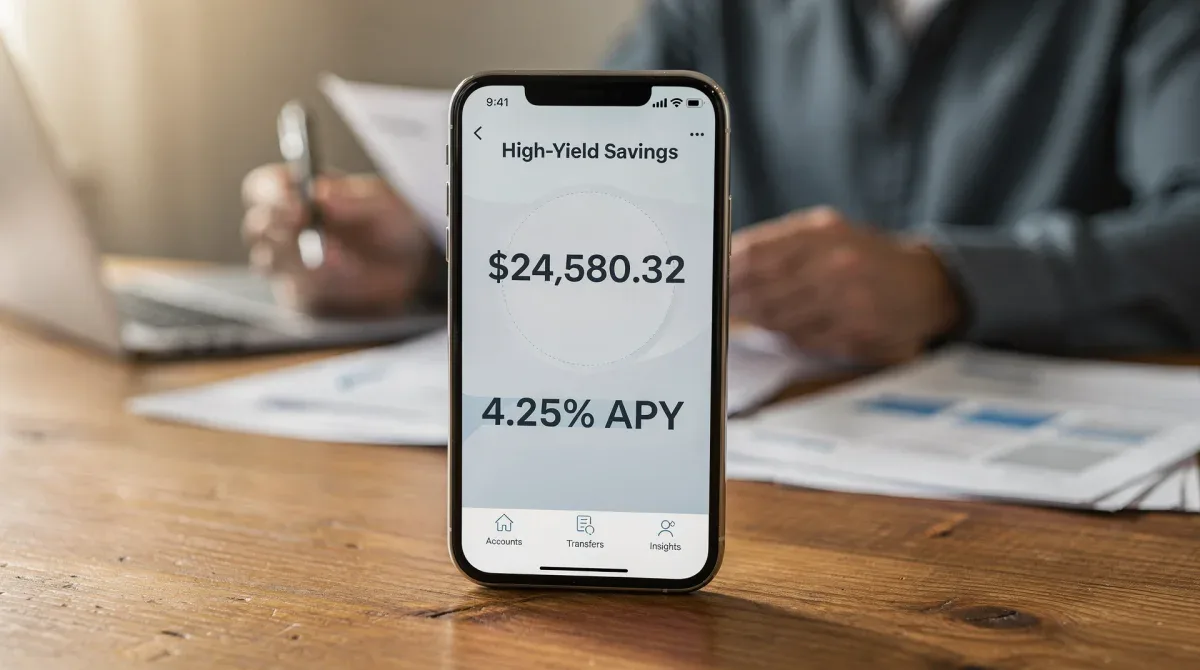
Interest Rate Sensitivity and Flexibility
High-yield cash accounts typically feature variable interest rates that can adjust upwards as the Federal Reserve raises its benchmark rates, allowing savers to benefit quickly from a dynamic market.
CDs, by contrast, lock in a fixed rate for the duration of their term, meaning that if rates increase after purchase, the CD holder misses out on higher potential earnings until maturity.
This flexibility of high-yield cash accounts allows for continuous optimization of returns, especially in periods of upward-trending interest rates, without incurring early withdrawal penalties.
The ability of high-yield cash accounts to adjust their rates in response to market movements provides a significant advantage. Savers are not penalized for accessing their funds, a common drawback with CDs that impose penalties for early withdrawals.
Comparing Returns: 4.25% vs. CD Averages
To truly understand why high-yield cash accounts paying 4.25% are outperforming traditional 12-month CDs right now, a direct comparison of current average rates is essential. While specific CD rates vary by institution, many national averages for 12-month CDs hover below the 4.25% mark seen in many high-yield accounts.
For instance, according to recent data from financial aggregators, the average 12-month CD rate from many large banks often falls in the 3.50% to 4.00% range. This gap, though seemingly small, can accumulate significantly over time, especially with larger principal amounts.
The difference in yield is not just a numerical discrepancy; it represents a tangible impact on a saver's purchasing power and wealth accumulation. Earning an extra 0.25% to 0.75% can translate into hundreds or even thousands of dollars more in interest over a year, depending on the deposit size.
The Power of Compounding
The higher Annual Percentage Yield (APY) offered by high-yield cash accounts, even by a fraction of a percentage point, can significantly impact the long-term growth of savings due to compounding. More frequent compounding, often daily or monthly, further amplifies these gains.
While CDs also offer compounding, their fixed rates mean that the absolute amount of interest earned is capped for the term. The dynamic nature of high-yield accounts allows for continuous accumulation at potentially increasing rates.
This continuous compounding at a higher rate is a powerful engine for wealth growth. It underscores precisely why high-yield cash accounts paying 4.25% are outperforming traditional 12-month CDs right now, offering a superior trajectory for your savings.
Liquidity and Accessibility: A Key Differentiator
Beyond interest rates, liquidity stands as a fundamental advantage of high-yield cash accounts over Certificates of Deposit. Savers can typically access their funds in a high-yield account at any time without incurring penalties, providing crucial financial flexibility.
This immediate access is invaluable for unexpected expenses or sudden investment opportunities, preventing the need to break a CD and forfeit earned interest. The ability to move funds freely is a significant comfort for many individuals and businesses.
CDs, conversely, penalize early withdrawals, often by sacrificing several months of interest. This rigidity can make them unsuitable for funds that might be needed in the short to medium term, despite their fixed-rate appeal.
The superior liquidity of high-yield cash accounts is a compelling factor, especially in an uncertain economic environment where access to cash can be paramount. This practical benefit contributes significantly to why high-yield cash accounts paying 4.25% are outperforming traditional 12-month CDs right now.
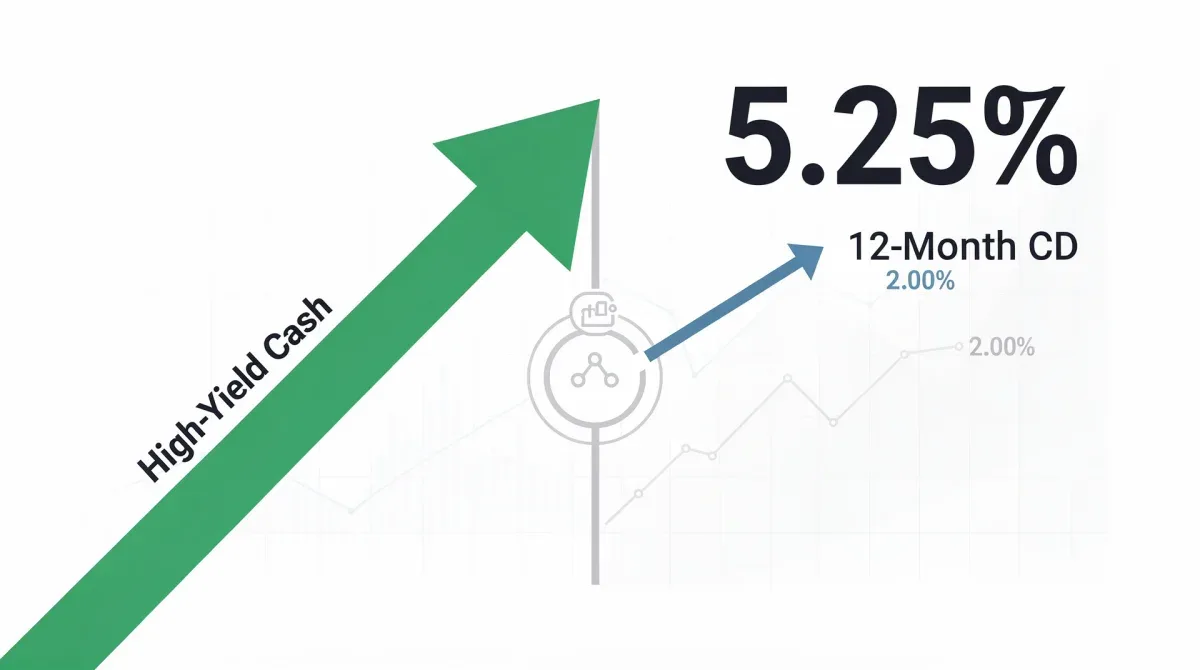
Financial Planning and Emergency Funds
High-yield cash accounts are ideal for emergency funds, providing both growth and immediate access without penalty.
Their liquidity makes them suitable for short-term savings goals, such as saving for a down payment or a large purchase, where funds might be needed sooner than anticipated.
CDs are better suited for funds with a definite future need, where the exact withdrawal date aligns with the maturity date, minimizing the risk of early withdrawal penalties.
Strategic financial planning often emphasizes accessible emergency savings. High-yield cash accounts fulfill this role perfectly, offering competitive returns without compromising the ability to respond to life's unpredictable moments.
Navigating the Risks: What to Consider
While high-yield cash accounts offer distinct advantages, it is important for consumers to understand the associated considerations. The primary risk with high-yield cash accounts is that their variable interest rates can decline if the Federal Reserve decides to lower benchmark rates.
This means that the attractive 4.25% APY might not be permanent, fluctuating with broader economic policy shifts. Savers should monitor economic forecasts and central bank announcements to anticipate potential changes in their earnings.
However, even with potential rate fluctuations, high-yield cash accounts often retain a competitive edge due to their underlying structure and the ongoing competition in the online banking sector. They remain a strong contender for current savings needs, showcasing why high-yield cash accounts paying 4.25% are outperforming traditional 12-month CDs right now.
Inflation and Purchasing Power
Another crucial consideration is inflation. While high-yield cash accounts currently offer strong nominal returns, the real return, after accounting for inflation, is what truly matters for purchasing power. Savers should always aim for rates that at least keep pace with or ideally exceed the inflation rate.
Currently, the 4.25% offered by many high-yield cash accounts provides a relatively strong hedge against inflation, particularly when compared to lower-yielding alternatives. This makes them a more effective tool for preserving and growing wealth in real terms.
Monitoring inflation data alongside interest rates is a critical aspect of effective financial management. Choosing accounts that offer competitive real returns helps ensure that your savings maintain their value over time, a key benefit of why high-yield cash accounts paying 4.25% are outperforming traditional 12-month CDs right now.
Future Outlook for Savings Vehicles
The dynamic nature of interest rates suggests that the current advantage of high-yield cash accounts may persist for the foreseeable future, especially if the Federal Reserve maintains a hawkish stance or keeps rates elevated. Market analysts predict that while rates might stabilize, a significant downturn is not immediately anticipated.
This outlook implies that the competitive pressure among online banks to offer attractive high-yield cash accounts will likely continue. Consumers can expect these accounts to remain a strong option for liquid savings, offering flexibility and robust returns.
However, it is always wise to remain vigilant and review your savings strategy periodically. Economic conditions can change rapidly, and what is optimal today might require adjustment tomorrow. Continuous monitoring ensures your money is always working as hard as possible for you.
Adapting Your Savings Strategy
Regularly review the interest rates offered by various financial institutions for both high-yield cash accounts and CDs to ensure your funds are in the most advantageous position.
Consider a diversified approach, using high-yield cash accounts for emergency funds and short-term goals, while exploring other investment vehicles for long-term growth.
Stay informed about Federal Reserve policy changes and economic indicators, as these factors significantly influence interest rate trends and the relative attractiveness of different savings products.
Adapting your savings strategy to current market realities is paramount for financial success. The current environment clearly favors flexible, high-yielding options, making it essential to understand why high-yield cash accounts paying 4.25% are outperforming traditional 12-month CDs right now.
Key Point | Brief Description |
|---|---|
Higher APY | High-yield accounts currently offer 4.25% or more, surpassing many 12-month CD rates. |
Liquidity | Funds in high-yield accounts are accessible without early withdrawal penalties. |
Rate Responsiveness | High-yield rates adjust with market changes, benefiting from rising interest rates. |
Competitive Landscape | Online banks drive higher rates in high-yield accounts due to fierce competition. |
Frequently Asked Questions About High-Yield Savings
Why are high-yield cash accounts paying 4.25% outperforming traditional 12-month CDs right now?▼
High-yield cash accounts often have variable rates that quickly adjust to rising market interest rates, unlike fixed-rate CDs. This agility, combined with strong competition among online banks, allows them to offer superior Annual Percentage Yields (APYs), such as 4.25%, making them more attractive in the current economic climate.
What is the main advantage of high-yield cash accounts over CDs?▼
The primary advantage is liquidity. High-yield cash accounts allow you to access your funds at any time without incurring penalties, providing crucial flexibility for unexpected expenses or new opportunities. CDs, by contrast, lock in your funds for a set term, imposing penalties for early withdrawals, which can be a significant drawback.
Are high-yield cash accounts safe?▼
Yes, most reputable high-yield cash accounts offered by FDIC-insured banks are just as safe as traditional savings accounts. Your deposits are protected by the Federal Deposit Insurance Corporation (FDIC) up to the standard limits, typically $250,000 per depositor, per institution, ensuring the security of your funds.
Will the 4.25% rate on high-yield cash accounts last indefinitely?▼
No, the 4.25% rate is typically variable and subject to change based on market conditions and Federal Reserve interest rate policies. While currently attractive, rates can go up or down. It's advisable to monitor economic forecasts and bank announcements to stay informed about potential rate adjustments and ensure your savings remain optimized.
Should I move all my savings from CDs to high-yield cash accounts?▼
The decision depends on your financial goals and risk tolerance. For emergency funds and short-term savings, high-yield cash accounts are often superior due to their liquidity and competitive rates. For funds you definitely won't need for a specific period and where a fixed rate is preferred, a CD might still have a place, but assess current offerings carefully.
What this means
The current financial landscape signals a clear advantage for flexible, high-yielding savings solutions. Understanding why high-yield cash accounts paying 4.25% are outperforming traditional 12-month CDs right now is crucial for optimizing your personal finances.
It is worth following official announcements, confirming local guidance, and monitoring indicators tied to interest rate movements, since future decisions may reshape medium-term effects. This knowledge empowers you to make informed decisions and ensure your money works harder for you.