Supply Chain Disruptions & US Goods: 6-Month Impact Forecast
Anúncios
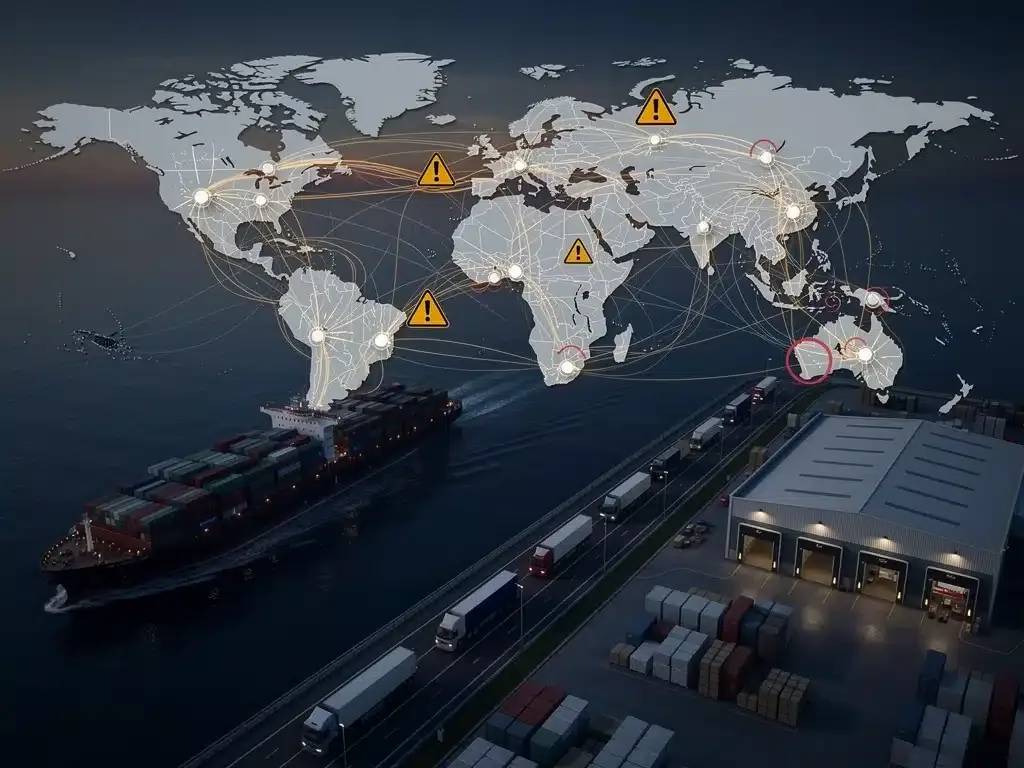
Understanding the real-time US Supply Chain Impact is critical as global trade shifts and tariff dynamics continue to reshape retail shelves across the nation.
From fluctuating freight costs to unexpected port congestion, both consumers and businesses are bracing for a volatile operational landscape over the next two quarters.
Recent forecasts highlight how persistent logistics bottlenecks and nearshoring adjustments are directly altering domestic goods availability.
As manufacturers pivot toward predictive AI routing and regional supplier networks, managing inventory stockouts and lead-time fluctuations has become the top operational priority for American retailers.
Staying ahead of these distribution challenges requires an insider view into upcoming freight market trends and import disruptions. Here is your six-month impact forecast on how shifting trade corridors will affect everyday product pricing and store inventories in 2026.
Anúncios
Understanding the Current State of Global Supply Chains
The global supply chain landscape remains complex and highly susceptible to various external pressures. Geopolitical tensions, labor shortages, and climate-related events continue to create bottlenecks that ripple through international trade networks.
These persistent challenges are not isolated incidents but rather interconnected factors that collectively exacerbate existing vulnerabilities.
Businesses are grappling with increased lead times, higher shipping costs, and unpredictable delivery schedules, directly influencing the US Supply Chain Impact.
The cumulative effect of these disruptions is a system under constant strain, where any new shock can trigger widespread delays and shortages. This necessitates a proactive approach to understanding and mitigating risks for the coming months.
Key Drivers of Current Disruptions
Several significant factors are currently driving the instability within global supply chains. These elements combine to create a challenging environment for the movement of goods worldwide.
Geopolitical conflicts, particularly in critical shipping lanes, have forced rerouting and increased transit times, adding significant costs and delays.
Energy price volatility also directly impacts transportation expenses, making logistics more expensive and less predictable.
Anúncios
- Geopolitical Instability: Conflicts in key regions disrupt shipping routes and commodity flows, impacting the US Supply Chain Impact.
- Labor Shortages: Persistent deficits in trucking, warehousing, and port operations personnel continue to impede efficient goods movement.
- Climate Events: Extreme weather conditions lead to infrastructure damage and operational shutdowns, further delaying shipments.
- Inflationary Pressures: Rising costs for raw materials, manufacturing, and transportation contribute to higher consumer prices and reduced purchasing power.
These drivers create a domino effect, where a problem in one part of the world can quickly manifest as a shortage or price hike in the United States. Businesses are working to diversify sourcing, but this process takes time and significant investment.
Forecasting U.S. Goods Availability: The Next Six Months
The projection for U.S. goods availability over the next six months suggests continued variability, with some sectors experiencing more significant challenges than others. Consumers should anticipate a mixed landscape, characterized by both improvements and persistent bottlenecks.
Economists and logistics experts indicate that while some supply chain pressures may ease, new ones could emerge, underscoring the dynamic nature of the situation. The US Supply Chain Impact will manifest differently across various product categories.
This outlook requires careful monitoring by both businesses and consumers to adapt to potential shifts in product availability and pricing. Preparedness will be key to navigating this evolving economic environment effectively.
Sectors Most Vulnerable to Shortages
Certain sectors are inherently more susceptible to supply chain disruptions due to their reliance on specific components, international sourcing, or complex manufacturing processes. These industries will likely face ongoing challenges.
Electronics, automotive parts, and certain food products are among those identified as particularly vulnerable. Their intricate supply networks mean that even minor disturbances can have amplified effects on availability.
- Electronics: Continued reliance on specialized semiconductors and rare earth minerals from limited global sources.
- Automotive Industry: Complex global manufacturing networks and just-in-time inventory systems make it vulnerable to component shortages.
- Specialty Foods: Dependence on seasonal crops, specific growing regions, and intricate cold chain logistics poses ongoing risks.
- Construction Materials: High demand coupled with production and transportation challenges for raw materials like steel, lumber, and cement.
The interconnectedness of these sectors means that shortages in one area can cascade into others. For instance, a lack of semiconductors not only impacts consumer electronics but also the production of modern vehicles and industrial machinery, further amplifying the US Supply Chain Impact.

Impact on Consumer Goods and Everyday Essentials
The effects of ongoing supply chain disruptions are directly felt by consumers, particularly in the availability and pricing of everyday goods. Shoppers may continue to encounter intermittent shortages and higher costs for a range of products.
Categories such as groceries, household items, and clothing are all subject to the broader pressures affecting global logistics and manufacturing. The US Supply Chain Impact touches nearly every aspect of daily life for American households.
Understanding these potential shifts allows consumers to make more informed purchasing decisions and adjust their expectations accordingly. Vigilance regarding product availability will remain a useful strategy.
Household Staples and Groceries
Grocery stores, while generally resilient, can still experience localized or temporary shortages of specific items. Factors like labor availability in agriculture and processing, along with transport issues, play a significant role.
While widespread food shortages are unlikely, consumers might notice less variety or higher prices for imported produce, certain packaged goods, or specialty items. This directly reflects the ongoing US Supply Chain Impact on food distribution.
Meat, dairy, and fresh produce supply chains are particularly sensitive to disruptions due to their perishable nature and specific handling requirements. Any delays can lead to spoilage and reduced availability on shelves.
Manufacturing and Production Challenges
U.S. manufacturers continue to grapple with a multitude of challenges, ranging from raw material procurement to labor availability. These issues collectively hinder their ability to meet demand and maintain consistent output.
The global nature of modern manufacturing means that delays in one part of the world can halt production lines domestically. This creates a significant US Supply Chain Impact, affecting both industrial and consumer product availability.
Companies are actively seeking ways to reshore production or diversify their supplier base, but these strategic shifts require substantial investment and time to implement fully. The transition period itself can contribute to further instability.
Raw Material Scarcity and Cost Increases
The scarcity of critical raw materials, coupled with significant price increases, presents a formidable obstacle for manufacturers. Industries relying on metals, plastics, and various chemical components are particularly affected.
These material constraints not only slow down production but also drive up the final cost of goods, which is inevitably passed on to consumers. The ongoing US Supply Chain Impact is thus a key driver of inflation.
Manufacturers are exploring alternative materials and negotiating long-term contracts to secure supplies, but these measures often come with higher costs. The global competition for these resources remains fierce.
Logistics and Transportation Bottlenecks
The efficiency of logistics and transportation networks is paramount to ensuring timely goods availability. However, these systems are currently experiencing significant bottlenecks, contributing to the broader US Supply Chain Impact.
Port congestion, trucking shortages, and rail network inefficiencies all conspire to delay the movement of products from origin to destination. These delays add considerable time and expense to the supply chain.
Addressing these issues requires substantial investment in infrastructure, technology, and workforce development, which represents a long-term endeavor. In the interim, businesses must navigate these persistent challenges.
Port Congestion and Shipping Delays
Major U.S. ports continue to face intermittent congestion, leading to longer wait times for vessels to unload and for cargo to be processed. This backlog creates a ripple effect throughout the entire supply chain.
The increased demand for shipping, coupled with labor shortages and equipment availability issues, exacerbates these problems. This directly impacts the speed at which imported goods reach American consumers, contributing to the US Supply Chain Impact.
Efforts are underway to improve port efficiency through automation and extended operating hours, but these initiatives face their own set of challenges, including union negotiations and the need for significant capital expenditure.
Government and Industry Responses
Both government bodies and private industries are actively implementing strategies to mitigate the ongoing supply chain disruptions. These responses aim to enhance resilience and ensure smoother flow of goods.
Policymakers are exploring legislative changes and financial incentives to support domestic production and infrastructure improvements.
Industry leaders are focusing on technological adoption and diversification strategies to reduce reliance on single points of failure, acknowledging the significant US Supply Chain Impact.
While these efforts are crucial, their full impact will likely be realized over the medium to long term, meaning immediate challenges will persist. Continuous collaborative action is essential for sustained improvement.
Policy Initiatives and Investments
The U.S. government has introduced various policy initiatives aimed at strengthening supply chain resilience. These include investments in port infrastructure, semiconductor manufacturing, and workforce training programs.
These initiatives are designed to address foundational vulnerabilities and reduce the nation’s dependence on foreign suppliers for critical goods. The long-term goal is to minimize the future US Supply Chain Impact from global events.
However, the implementation of these large-scale projects takes time, and their benefits will not be immediately apparent. Continued political will and sustained funding are necessary for their success.
Technological Solutions and Innovations
Technology is playing an increasingly vital role in addressing supply chain challenges, offering solutions for enhanced visibility, efficiency, and predictive analytics. Innovations are helping businesses adapt to the dynamic environment.
From artificial intelligence and blockchain to advanced data analytics, these tools provide greater insight into goods movement and potential disruptions. Leveraging technology is a key strategy for managing the US Supply Chain Impact effectively.
While technology offers significant promise, its adoption requires investment and skilled personnel, posing challenges for smaller businesses. However, the benefits of improved resilience often outweigh these initial hurdles.
AI and Data Analytics for Supply Chain Optimization
Artificial intelligence and advanced data analytics are transforming how supply chains are managed. These technologies enable businesses to predict demand more accurately, optimize inventory levels, and identify potential bottlenecks before they escalate.
By analyzing vast amounts of data, AI can provide real-time insights into global shipping conditions, supplier performance, and consumer purchasing patterns. This proactive approach helps to mitigate the US Supply Chain Impact.
Furthermore, predictive modeling allows companies to simulate various disruption scenarios and develop contingency plans, enhancing their ability to respond swiftly and effectively to unforeseen events.
Preparing for the Future: Strategies for Businesses and Consumers
As the landscape of goods availability continues to evolve, both businesses and consumers must adopt proactive strategies to navigate potential challenges. Preparedness and adaptability are crucial for resilience.
Businesses are focusing on diversification, inventory management, and strengthening supplier relationships to mitigate future risks.
Consumers, in turn, can employ strategies like early purchasing and flexible brand choices to ensure access to needed items, understanding the ongoing US Supply Chain Impact.
These forward-looking approaches aim to build greater resilience against future disruptions, fostering a more stable and predictable environment for the flow of goods. Continuous learning and adaptation will be key.
Business Resilience and Diversification
For businesses, building resilience means moving beyond just-in-time inventory models to a more robust, diversified approach. This includes exploring multiple suppliers, regionalizing production, and investing in buffer stocks.
Diversifying sourcing geographically and among different vendors reduces reliance on any single point of failure, thereby lessening the potential US Supply Chain Impact from localized disruptions. This strategic shift requires careful planning and investment.
Companies are also focusing on improving communication and collaboration with their supply chain partners, fostering stronger relationships that can withstand periods of stress and uncertainty.
| Key Point | Brief Description |
|---|---|
| Ongoing Disruptions | Global events, labor issues, and climate continue to strain logistics. |
| Vulnerable Sectors | Electronics, automotive, and some food products face higher risks. |
| Consumer Impact | Intermittent shortages and potential price increases for various goods. |
| Mitigation Efforts | Government policies and industry innovations aim to enhance resilience. |
Frequently Asked Questions About US Supply Chain Impact
How long will the current supply chain disruptions last?▼Experts predict that significant disruptions will likely persist for at least the next 6-12 months, with some challenges extending further. While some areas may see improvement, new issues can emerge, maintaining a dynamic and unpredictable environment for the US Supply Chain Impact.
Which products are most likely to be affected by shortages?▼Products heavily reliant on global components, such as electronics and automotive parts, are highly vulnerable. Additionally, certain imported foods, specialty items, and construction materials could experience intermittent shortages, demonstrating the broad US Supply Chain Impact.
What can consumers do to prepare for potential goods unavailability?▼Consumers can prepare by purchasing essential non-perishable items in advance, being flexible with brand choices, and monitoring news for specific product alerts. Diversifying shopping locations can also help mitigate the direct US Supply Chain Impact on personal consumption.
How are businesses adapting to these disruptions?▼Businesses are diversifying their supplier networks, investing in domestic production, and adopting advanced technologies like AI for better forecasting. They are also optimizing inventory management and strengthening logistics partnerships to minimize the US Supply Chain Impact.
Will supply chain issues lead to higher prices for goods?▼Yes, ongoing supply chain disruptions often contribute to increased costs due to higher shipping rates, raw material prices, and labor expenses. These elevated costs are frequently passed on to consumers, resulting in higher retail prices and a noticeable US Supply Chain Impact on household budgets.
Looking Ahead: Navigating Persistent Volatility
The investigation into the US Supply Chain Impact over the next six months reveals a landscape of persistent, albeit evolving, volatility.
While some pressures may ease, new challenges will inevitably emerge, requiring continuous adaptation from both businesses and consumers.
Monitoring key indicators, understanding sector-specific vulnerabilities, and leveraging strategic planning will be crucial for navigating this complex period successfully.