Vocational Training vs. Traditional Degrees 2026: Cost-Benefit Analysis
Anúncios
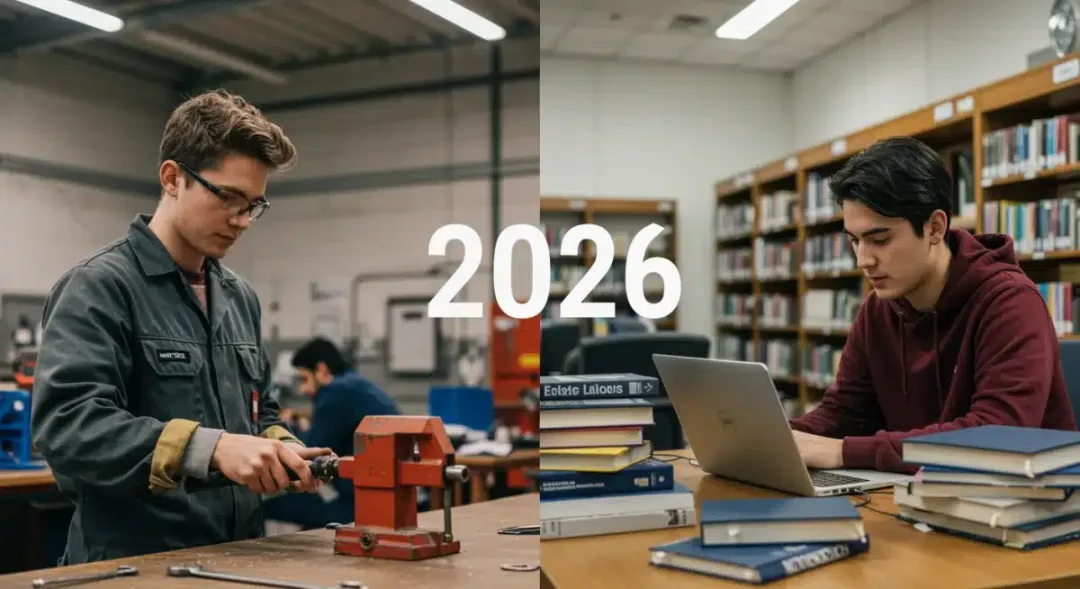
Choosing the right path today requires more than just ambition; it demands a strategic look at Vocational Training vs. Traditional Degrees in 2026.
As the American economy shifts toward “skills-first” hiring, understanding which educational investment offers the fastest return on your future has never been more vital.
This analysis deconstructs the financial reality of trade schools versus four-year universities, focusing on “Day-One Readiness” and long-term wealth.
We examine how specialized certifications and academic credentials influence your debt-to-income ratio in a market increasingly shaped by AI and automation.
Whether you are pursuing technical mastery in the skilled trades or a comprehensive degree, our verified data provides a clear roadmap for your career launch. Discover how to gain a competitive edge in 2026 by aligning your learning journey with the actual demands of today’s workforce.
Anúncios
The Evolving Landscape of Education and Employment in 2026
The educational and employment landscapes are undergoing significant transformations as we approach 2026. Technological advancements, shifting industry demands, and economic fluctuations are reshaping the value proposition of various educational credentials.
Traditional four-year degrees, once the undisputed gold standard, are now being critically examined for their return on investment, particularly concerning rising tuition costs and student debt.
Concurrently, vocational training programs are gaining traction, offering specialized skills tailored to immediate job market needs.
This dynamic environment requires career starters to adopt a strategic approach to their education, carefully considering how each option aligns with their career aspirations and financial realities. The focus is increasingly on practical skills and direct employment pathways.
Financial Impact: Tuition, Debt, and Earning Potential
One of the most significant factors in the choice between Vocational Training vs. Traditional Degrees in 2026 is the financial impact. Traditional four-year degrees often come with substantial tuition fees, leading to significant student loan debt upon graduation.
In contrast, vocational training programs typically have lower tuition costs and shorter completion times, translating into less debt and an earlier entry into the workforce. This immediate financial advantage can be a powerful determinant for many career starters..
However, the long-term earning potential also plays a crucial role. While some traditional degrees may offer higher lifetime earnings, the initial years often see vocational graduates earning competitive wages, sometimes even surpassing their degree-holding counterparts in specific skilled trades.
Anúncios
Tuition Costs and Debt Accumulation
- Traditional four-year university degrees can incur an average of $30,000 to $120,000 or more in tuition and fees, leading to substantial student loan debt that can take decades to repay.
- Vocational training programs, including trade schools and community college certificates, typically range from $5,000 to $20,000, resulting in significantly lower debt burdens for graduates.
- The time spent in education also differs, with vocational programs often completed in months to two years, versus the four or more years required for a bachelor’s degree, impacting lost earning potential during study.
Initial Earning Potential Differences
Upon entering the workforce, graduates from vocational programs often experience a quicker ascent to earning a living wage due to their specialized, in-demand skills.
They are frequently employed directly out of training, filling critical roles in sectors like healthcare, manufacturing, and technology.
Conversely, many traditional degree holders, particularly in fields without direct vocational application, may face a longer job search or start in entry-level positions that do not immediately reflect their educational investment.
This initial disparity is a key aspect of the Vocational Training vs. Traditional Degrees in 2026 debate.
The immediate return on investment for vocational training can be quite compelling, especially for individuals prioritizing financial independence and avoiding substantial debt at the outset of their careers.
This early financial stability can also provide a foundation for future educational pursuits or entrepreneurial ventures.
Career Readiness and Skill Development for 2026
Career readiness is a paramount concern for anyone entering the job market in 2026. Vocational training programs are explicitly designed to provide hands-on, practical skills directly applicable to specific occupations.
This focused approach ensures graduates are job-ready from day one, often possessing certifications and licenses required for their chosen fields. Employers frequently seek out these graduates due to their immediate utility and reduced need for extensive on-the-job training.
Traditional degrees, while offering a broader theoretical foundation and critical thinking skills, may require graduates to gain practical experience or further specialized training to become fully proficient in a specific role. This can sometimes translate to a slower entry into specialized positions.
Industry Demand for Skilled Trades
The demand for skilled trades professionals continues to outpace the supply in many sectors across the United States. Industries like construction, automotive, healthcare support, and information technology consistently report shortages of qualified workers.
This high demand means that graduates of vocational programs often enjoy excellent job security and competitive compensation packages.
The emphasis on practical skills makes Vocational Training vs. Traditional Degrees in 2026 a compelling option for those seeking direct employment paths.
Furthermore, many vocational fields are less susceptible to automation, as they often involve complex manual tasks, problem-solving, and direct client interaction that machines cannot easily replicate. This offers a degree of future-proofing for vocational careers.
Long-Term Career Growth and Flexibility
When considering Vocational Training vs. Traditional Degrees in 2026, it is essential to look beyond immediate employment and consider long-term career growth and flexibility.
Traditional degrees are often seen as providing a broader foundation that can lead to diverse career paths and advanced leadership roles.
The critical thinking, analytical, and communication skills developed in a university setting are highly valued in many corporate and managerial positions. These skills can facilitate transitions between industries and roles over a professional lifetime.
Vocational training, while specialized, also offers significant growth opportunities. Many skilled trades professionals can advance to supervisory roles, start their own businesses, or pursue further specialized certifications to expand their expertise and earning potential.
Pathways to Advancement
- Traditional degree holders can leverage their broad education for management, executive, and research-oriented positions, often requiring graduate-level studies for top-tier roles.
- Vocational graduates can advance through experience, obtaining additional certifications, or even pursuing entrepreneurship by starting their own contracting or service businesses.
- Hybrid models, where individuals combine vocational training with some college courses or later pursue a degree, are also becoming increasingly popular, offering the best of both worlds.
Adaptability in a Changing Job Market
The ability to adapt to a changing job market is crucial for sustained career success. Traditional degrees, with their emphasis on transferable skills, can offer flexibility in pivoting to new fields as industries evolve.
However, vocational training also provides adaptability, as many skilled trades require continuous learning and adaptation to new technologies and techniques. The hands-on nature of vocational work often fosters a problem-solving mindset valuable in any profession.
The key lies in continuous professional development, regardless of the initial educational path. Both vocational and traditional education can serve as springboards for lifelong learning and career evolution, making the choice about initial entry rather than a permanent limitation.
The Role of Hybrid Models and Lifelong Learning
Increasingly, the discussion of Vocational Training vs. Traditional Degrees in 2026 is moving beyond a simple either/or proposition. Hybrid educational models are emerging as a powerful alternative, allowing individuals to combine the best aspects of both pathways.
For example, a student might complete a vocational program to gain immediate employment and then pursue a traditional degree part-time or later in their career. This approach allows for early financial independence while still building a broader educational foundation.
Lifelong learning is also becoming a universal requirement, irrespective of the initial educational choice. The rapid pace of technological change demands continuous skill development and adaptation, making foundational learning a perpetual process.
Combining Practical Skills with Theoretical Knowledge
Hybrid models offer a unique advantage by integrating practical, job-specific skills with the critical thinking and analytical capabilities fostered by traditional academic programs.
This creates well-rounded professionals who are both competent in their craft and adaptable to new challenges.
Community colleges often play a pivotal role in these hybrid models, offering both vocational certificates and transferable credits towards bachelor’s degrees. This flexibility provides an accessible and affordable route for many career starters.
The synergy between practical application and theoretical understanding can lead to innovative solutions and enhanced career trajectories, making these blended approaches highly relevant in 2026 and beyond. KanguruNews.com highlights these integrated paths as crucial for future success.

Employer Perspectives on Credentials in 2026
Employer perspectives are a critical component in the Vocational Training vs. Traditional Degrees in 2026 analysis. Many employers are shifting their hiring practices, increasingly prioritizing demonstrable skills and experience over specific degree types.
While a traditional degree may still be a prerequisite for certain corporate or highly specialized roles, vocational certifications and direct work experience are gaining significant weight in technical and skilled trades sectors. This change reflects a pragmatic need for immediate productivity.
Companies are also investing more in internal training and upskilling programs, recognizing that the pace of technological change often outstrips traditional educational curricula. This trend further emphasizes the value of foundational skills, regardless of how they were acquired.
What Employers Value Most
- Demonstrated Skills: Employers are actively seeking candidates who can prove their competency through portfolios, certifications, and practical assessments.
- Work Experience: Internships, apprenticeships, and prior job roles are highly valued, indicating a candidate’s ability to perform in a real-world environment.
- Soft Skills: Communication, problem-solving, teamwork, and adaptability are universally sought-after traits, regardless of educational background.
The Changing Hiring Landscape
The hiring landscape in 2026 is less about a single credential and more about a combination of skills, experience, and the ability to learn. Employers are becoming more open to diverse educational backgrounds, provided candidates can meet the job requirements.
This shift benefits individuals who pursue vocational training, as their programs are inherently designed to produce graduates with immediately applicable skills. It also challenges traditional degree holders to ensure their education is complemented by practical experience.
Ultimately, the most successful career starters in 2026 will be those who can effectively articulate and demonstrate their value to potential employers, regardless of whether their path was primarily vocational or academic. KanguruNews.com continues to track these crucial employer trends.
Making an Informed Decision: Personal Goals and Market Realities
The decision between Vocational Training vs. Traditional Degrees in 2026 ultimately hinges on a thorough assessment of personal goals, financial circumstances, and current market realities.
There is no one-size-fits-all answer, and what works for one individual may not be suitable for another.
Career starters must honestly evaluate their interests, aptitudes, and long-term aspirations. Are they drawn to hands-on work and specific trades, or do they prefer a more theoretical and analytical approach to problem-solving?
Understanding the current and projected demand for various occupations is also critical. Researching job growth trends, average salaries, and required qualifications for desired careers can provide invaluable guidance in this complex decision-making process.
Self-Assessment and Career Exploration
Engaging in self-assessment tools, career counseling, and informational interviews with professionals in various fields can help clarify personal preferences. This proactive exploration is essential for making an informed choice about educational pathways.
Considering factors like geographical mobility, work-life balance preferences, and potential for entrepreneurship also plays a role.
Vocational paths often offer opportunities for self-employment, while traditional degrees might lead to more structured corporate environments.
The most effective strategy involves aligning educational choices with a clear understanding of one’s own strengths and the practical demands of the job market. This personalized approach to the Vocational Training vs. Traditional Degrees in 2026 dilemma is key.
| Key Comparison Aspect | Description for 2026 |
|---|---|
| Cost & Debt | Vocational training generally lower cost, less debt; traditional degrees higher cost, significant debt. |
| Time to Market | Vocational programs offer quicker entry into employment; traditional degrees have longer study periods. |
| Skill Focus | Vocational: specific, hands-on job skills. Traditional: broad, critical thinking, theoretical knowledge. |
| Career Progression | Both offer advancement, but through different routes (experience/certifications vs. advanced degrees). |
Frequently Asked Questions About Career Paths in 2026
What is the main financial advantage of vocational training in 2026?▼The primary financial advantage of vocational training in 2026 is its significantly lower cost and shorter duration, leading to less student debt. Graduates can enter the workforce much faster, starting to earn income sooner and establishing financial independence earlier than traditional degree holders.
Do traditional degrees still offer a better long-term earning potential?▼While traditional degrees often correlate with higher lifetime earnings, this is not universally true across all fields. Many vocational careers offer competitive salaries, especially in high-demand skilled trades. The long-term potential depends heavily on the specific field, continuous learning, and career advancement within either path.
How does career readiness differ between the two options?▼Vocational training excels in direct career readiness, equipping students with job-specific, hands-on skills for immediate employment. Traditional degrees provide broader foundational knowledge and critical thinking, which may require additional practical experience or training before entering specialized roles in the workforce.
Are hybrid educational models becoming more common for career starters?▼Yes, hybrid educational models are increasingly common and beneficial. Combining vocational training with some traditional college courses allows career starters to gain immediate job skills while also building a broader academic foundation. This flexibility offers a balanced approach to education and career development in 2026.
What factors should I consider when choosing between vocational and traditional education?▼When choosing, consider your personal interests, aptitude for hands-on work versus theoretical study, financial situation, and career aspirations. Also, research job market demand, potential earnings, and long-term growth opportunities in fields aligned with both vocational training and traditional degrees to make an informed decision.
Looking Ahead: Navigating Your Educational Journey in 2026
The choice between Vocational Training vs. Traditional Degrees in 2026 is not merely an academic one; it is a strategic career decision with significant financial and professional implications.
As the job market continues its rapid evolution, both pathways offer distinct advantages, depending on individual circumstances and career goals.
KanguruNews.com underscores the importance of personalized research and a clear understanding of current industry demands. Career starters who align their educational investments with verifiable market needs and personal aptitudes will be best positioned for success.
The landscape suggests a future where adaptability, continuous learning, and demonstrable skills will be paramount. Whether through a trade school or a university, the ultimate goal remains a fulfilling and prosperous career in the dynamic economy of 2026.