Labor Department Reports 175,000 New Jobs: Unemployment Holds at 3.9%
Anúncios
Tracking labor market health requires analyzing key economic indicators beyond overall hiring figures. Evaluating the latest labor department jobs report reveals that creating 175,000 new nonfarm payroll positions alongside a stable 3.9% unemployment rate points to a cooling yet resilient workforce landscape.
Maintaining steady unemployment while moderating monthly payroll additions helps ease inflationary pressures on wage growth. Steady labor force participation rates paired with balanced hiring across service and healthcare sectors demonstrate sustained stability without overheating the broader economic engine.
Understanding nonfarm employment trends empowers investors, employers, and policymakers to navigate shifting Federal Reserve interest rate expectations. Here is how current payroll data, wage growth metrics, and sector breakdowns shape the economic outlook.
Understanding the Latest Labor Department Jobs Report
The recent announcement from the Labor Department indicates a notable, yet perhaps more moderated, pace of job creation. This figure, while still positive, suggests a labor market that might be cooling slightly compared to previous months, but remains robust.
The report is a critical barometer for economic health, influencing everything from consumer confidence to Federal Reserve policy decisions. Its details provide a snapshot of where the U.S. economy stands today and potential directions for tomorrow.
Anúncios
Analyzing the nuances within this labor department jobs report reveals sector-specific trends and shifts in workforce dynamics. These underlying factors are just as important as the headline numbers for a comprehensive understanding.
Key Figures: 175,000 New Jobs and 3.9% Unemployment
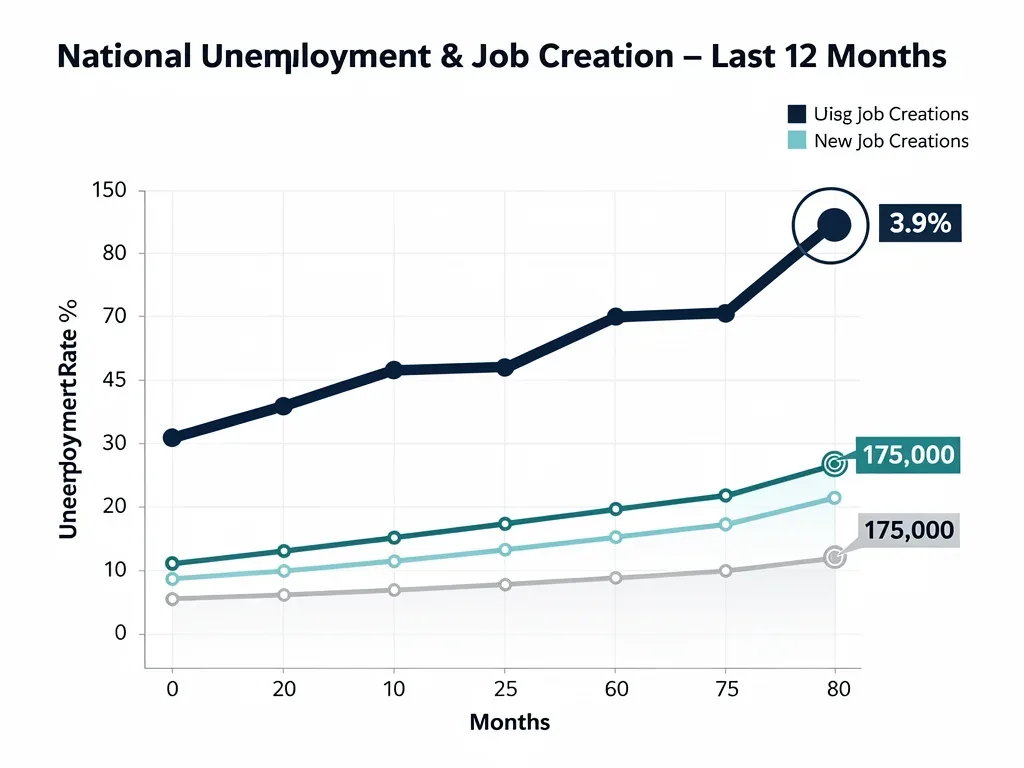
The headline numbers from the Labor Department are straightforward: 175,000 new jobs were added in the past month, and the national unemployment rate remained stable at 3.9%. These figures are closely watched by economists and the public alike.
While 175,000 new jobs represents solid growth, it is a decrease from some of the higher figures seen recently, prompting questions about the labor market's trajectory. The consistent unemployment rate, however, offers a sense of stability amid these changes.
This combination of moderate job growth and steady unemployment suggests a labor market that is adjusting rather than contracting. It provides a balanced view of economic activity, avoiding extremes of rapid expansion or significant decline.
Sectoral Contributions to Job Growth
Healthcare and Social Assistance: Continued to be a strong driver of job creation.
Leisure and Hospitality: Showed steady, albeit slower, gains as the sector recovers fully.
Government: Contributed significantly to the overall job increase, reflecting public sector hiring.
Professional and Business Services: Experienced moderate growth, indicating ongoing demand for specialized skills.
The distribution of new jobs across various sectors provides crucial context for the overall labor department jobs report. Understanding which industries are expanding and which are slowing helps to paint a more complete picture of the economic landscape.
For instance, consistent growth in healthcare highlights demographic trends and ongoing demand for essential services. Meanwhile, the steady pace in professional services suggests a foundational strength in the economy's intellectual capital.
Analyzing the Steady Unemployment Rate at 3.9%
Maintaining a national unemployment rate of 3.9% is a significant achievement, especially given the various economic headwinds and adjustments. This stability indicates a resilient labor force and effective adaptation to changing market conditions.
Anúncios
A rate below 4% is generally considered indicative of a healthy and full-employment economy. The fact that it has held steady suggests that job losses are not outpacing job gains, even with a slightly slower pace of new employment.
This consistent unemployment rate provides a strong foundation for consumer spending and economic confidence. It reassures that despite some shifts, the fundamental access to employment remains robust across the nation.
Implications for the Workforce and Economy
The steady unemployment rate has several key implications for both workers and the broader economy. It suggests that individuals seeking employment are largely able to find opportunities, even if the competition for certain roles might be increasing.
For employers, a stable unemployment rate might mean a slightly larger pool of available talent, potentially easing some of the intense hiring pressures seen in recent years. This could lead to more balanced wage growth and reduced labor costs.
Economically, this stability can contribute to sustained consumer confidence and spending, which are vital components of GDP growth. It also gives the Federal Reserve more flexibility in its monetary policy decisions.

Regional Disparities and Workforce Dynamics
While the national figures provide an overall picture, a deeper dive into regional labor markets reveals varying conditions. Some areas may be experiencing more robust job growth, while others could be seeing slower expansion or even contractions in specific sectors.
These regional disparities are often influenced by local industry concentrations, demographic shifts, and specific economic development initiatives. Understanding these localized trends is essential for a complete analysis of the national report.
Furthermore, workforce dynamics, such as labor force participation rates and the types of jobs being created, offer additional layers of insight. These factors help explain the underlying health and adaptability of the U.S. labor market beyond just the top-line numbers.
The Role of Labor Force Participation
The labor force participation rate, which measures the proportion of the population that is either employed or actively looking for work, provides important context for the unemployment rate. Changes in this rate can significantly influence how we interpret job creation figures.
If participation increases alongside job growth, it suggests more people are entering the workforce and finding employment, indicating a stronger labor market. Conversely, if participation declines while unemployment remains low, it could point to a shrinking workforce rather than true economic strength.
Monitoring these participation trends is crucial for assessing the long-term health and capacity of the U.S. economy. It helps to differentiate between a genuinely expanding labor market and one that simply has fewer people seeking work.
Challenges and Opportunities in the Current Job Market
Despite the positive headline numbers from the labor department jobs report, the current job market presents both challenges and opportunities. Businesses continue to navigate evolving consumer demands, technological advancements, and inflationary pressures.
Workers, on the other hand, are seeking fair wages, flexible work arrangements, and opportunities for skill development. The balance between employer needs and employee expectations is constantly shifting, creating a dynamic environment.
Understanding these challenges and opportunities is vital for both job seekers and employers to strategically adapt. It requires a forward-looking perspective to anticipate future trends and prepare for changes in the economic landscape.
Addressing Skill Gaps and Workforce Development
Investment in vocational training programs to align skills with industry needs.
Promotion of lifelong learning and upskilling initiatives for existing workers.
Collaboration between educational institutions and businesses to create relevant curricula.
Focus on digital literacy and technological proficiency across all sectors.
The persistent challenge of skill gaps in certain industries continues to influence hiring dynamics. Even with new jobs being created, a mismatch between available skills and employer requirements can hinder efficient job placement.
Addressing these gaps through targeted education and training programs is paramount for sustaining long-term economic growth. Workforce development initiatives play a critical role in ensuring that the labor force can meet the demands of an evolving economy.
Future Outlook: What to Expect from the Labor Market
Looking ahead, the labor market is expected to continue its trajectory of moderate growth and stability, but with a keen eye on inflation and interest rate decisions. The labor department jobs report will remain a key indicator for future economic forecasts.
Analysts will be closely watching for any significant shifts in job creation numbers or the unemployment rate that could signal a change in the economic climate. These reports provide invaluable data for predicting future trends.
The interplay of global economic factors, domestic policy changes, and technological innovation will all play a role in shaping the future of the U.S. job market. Adaptability and informed decision-making will be crucial for all stakeholders.
How the Labor Department Gathers and Reports Data
The accuracy and reliability of the labor department jobs report are paramount, and this depends on a rigorous data collection and analysis process. Understanding this methodology helps in appreciating the robustness of the reported figures.
The Bureau of Labor Statistics (BLS), an agency within the U.S. Department of Labor, conducts two primary surveys: the Current Employment Statistics (CES) survey, also known as the establishment survey, and the Current Population Survey (CPS), or household survey.
The CES survey collects data from about 119,000 businesses and government agencies representing approximately 629,000 individual worksites. This survey provides detailed industry data on employment, hours, and earnings of workers on nonfarm payrolls.
Methodology Behind the Numbers
Establishment Survey (CES): Gathers payroll data from businesses to determine job creation.
Household Survey (CPS): Surveys households to calculate the unemployment rate and labor force participation.
Seasonal Adjustments: Data is adjusted to remove typical seasonal fluctuations, providing a clearer trend.
Benchmarking: Annual revisions ensure the survey data aligns with comprehensive unemployment insurance records.
The household survey, on the other hand, collects data from a sample of about 60,000 eligible households each month. This survey provides information on the employment status of the civilian noninstitutional population, including demographic characteristics, and is the source for the unemployment rate.
Both surveys are critical for providing a comprehensive view of the labor market, with each offering unique insights. The combination of these methodologies ensures a well-rounded and accurate representation of employment trends and unemployment figures.
Key Point | Brief Description |
|---|---|
Job Creation | 175,000 new jobs reported by the Labor Department. |
Unemployment Rate | National unemployment held steady at 3.9%. |
Economic Impact | Suggests a resilient labor market, influencing Fed policy. |
Sectoral Growth | Healthcare, leisure, government, and professional services led gains. |
Frequently Asked Questions About the Jobs Report
What does the labor department jobs report indicate about the economy?▼
The report indicates a resilient U.S. economy with continued job growth, albeit at a slightly moderated pace. The steady 3.9% unemployment rate suggests a robust labor market that is effectively absorbing new entrants and maintaining employment levels, providing a strong foundation for economic activity.
How does 175,000 new jobs compare to previous months?▼
While 175,000 new jobs is a solid gain, it represents a moderation from some higher figures seen in prior months. This suggests a gradual cooling of the labor market, which could be a positive sign for inflation control without signaling a significant downturn in employment opportunities.
What sectors are contributing most to job growth?▼
Healthcare and social assistance, leisure and hospitality, government, and professional and business services were among the leading sectors for job creation. This broad-based growth indicates diverse areas of strength within the U.S. economy, contributing to the overall positive labor department jobs report.
What is the significance of the 3.9% unemployment rate holding steady?▼
A steady unemployment rate of 3.9% is highly significant as it indicates a stable and healthy labor market. It implies that the economy is near full employment, and job seekers are generally able to find positions, contributing to consumer confidence and economic stability despite job growth moderation.
How might this jobs report influence Federal Reserve decisions?▼
This labor department jobs report will be a key factor for the Federal Reserve. A moderately growing job market and stable unemployment might give the Fed confidence that its policies are working to control inflation without causing a recession. This could influence future interest rate decisions, possibly leading to a more patient approach to rate cuts.
What this means
The latest labor department jobs report, showing 175,000 new jobs and a steady 3.9% unemployment rate, paints a nuanced picture of the U.S. economy. It suggests a resilient labor market that is cooling gradually, rather than sharply, indicating a potential path towards a soft landing.
This data will be critical for policymakers, especially the Federal Reserve, in shaping future monetary decisions. Observers should continue to monitor upcoming reports for sustained trends and their broader implications for economic stability and growth.